SmartRings

A high-tech ring that promises to replicate many of the features found in the latest crop of smartwatches, but without strapping a brick to your wrist, is now one step closer to reality.

Here’s how to set yourself up for success in 2014

As the old saying goes: your goals don’t work unless you do. You will likely face bumps in the road and moments when you feel as though you’re not making progress. When this happens, remind yourself of all that you have done, refocus, and keep going.

Science

“This is completely new and very much simpler than anything that has been done before,” said Andrew Hodges , a mathematical physicist at Oxford University who has been following the work.

Flat. Like a streak across space. Thin. Stretched out. How come whenever we see galaxies, they always look like this

NASA has the answer. And it has something to do with how a ball of dough becomes pizza.

The Masks We Wear

The smiles and laughter we display are clever devices hiding our pains and sorrows we carry within us. While tears and heart break are displayed for all to see revealing the thin cracks of the mask that we wear, allowing a small portion of how we truly ache inside be seen from observers quietly watching for you to reveal yourself. - Se more..

Showing posts with label science. Show all posts

Thursday, 2 January 2014

Is cracking your knuckles a bad idea?

Cracking sounds on your joints can definitely sound—if not feel—alarming. It's probably happened to all of us, though, whether from cracking knuckles on purpose or just hearing popping sounds when stretching. I talked to a few medical experts to find out what's going on and whether or not all this noise is a sign of a medical issue. Here's what they said.

It's Usually Harmless The common misconception that cracking your joints will cause arthritis is just that—a misconception. Dr. Levi Harrison, an orthopedic surgeon and the author of The Art of Fitness, says he's often asked this question. He explains:

Commonly, joints make an audible cracking sound when the joint is stretched or manipulated due to gas inside the joint fluid or synovial fluid. Common gases in the joint are O2 (Oxygen) and N (Nitrogen). When you flex and stretch your fingers in order to "crack your knuckles", the capsule around the joint which contains this gas filled fluid causes the bubbles to burst which causes that sound. The sound may be loud or dull. Often, you have to wait a period of time before the sound can be heard again, if you manipulate the joint. It takes time for the gas bubbles to reform in the joint.

Dr. Michael Haley, owner of Agape Chiropractic, offers a few more insights —and strange medical terms (joint mice? crepitus?!) that describe the issue:

Sometimes the sounds are coming from muscle bellies. Other times they are coming from the deeper joint structures - tendons, ligaments, and discs. Sometimes the sounds aren't "cracking sounds" at all, but rather, inflammation in the joints that is "squishing around" with movement. These are the noises someone might hear continuously when they turn their heads side to side. Ideally, turning your head does not make any noise. Joint mice may contribute to the sounds. These sounds are collectively usually referred to as "crepitus".

Based on clinical experience, it seems that tension builds up and allows for the joints to "crack" or release. Inactivity seems to increase the need... whereas frequent movement and stretching seems to not only decrease the need, but also even the possibility of of cracking the joints.

An interesting observation is that humans learn to disobey their need for movement. Cats and dogs seem to stretch out their bodies, with an emphasis on their spines, after every period of inactivity. Kids seem to stretch after inactivity too. But adults tend to get up and go about their sedentary days. No wonder their joints crack... or need cracking…

In other words, it's a good idea to fit more movement into your day, if you're not already doing so.

When You Might Want to Consult a Doctor Those assurances aside, there are times cracking joints is more ominous. If you experience any pain with the cracking, it could be a sign of a medical problem. Dr. Harrison says:

Individuals who have painful grinding and creaking joints that started after an injury or trauma to their joints may have arthritis. This is not a good thing. Arthritis occurs when the protective cartilage lining of a joint has been damaged or eroded. This can occur from an injury, age, or an even inflammatory condition like rheumatoid arthritis.

If you have had an injury, for example to your hips or knee and experience significant hip and or knee pain, as well as popping of your joints, you may have arthritis in these areas. I recommend an evaluation by your healthcare practitioner. After an appropriate history and physical exam, they may order the necessary radiographic tests to evaluate the joint. Arthritis is common and pain with creaking and popping in any joint warrants proper evaluation by your doctor.

In the absence of pain, though, you probably don't have to worry (but can check with your doctor if you're still anxious about this). Dr. Harrison doesn't recommend cracking your knuckles, neck, or anything else, but it's still probably harmless. Consider this research noted by Dr. Amy Baxter, CEO of MMJ Labs (which makes a really cool pain blocker, Buzzy):

One really fun paper was what we call an "n of 1" study - some guy (Dr. DL Unger) decided to only crack one hand his whole life, and see what happened. He then published the result. Bottom line: the cracked knuckle was bigger, but none the worse for wear.

I also asked my sister, a family physician in Arizona, about this, and she said she gets this question a lot—strangely from young teenage patients. Her advice? It's probably nothing...but if it bothers you, stop cracking your knuckles or neck. So there you go.

Monday, 30 December 2013

Study suggests we're all susceptible to false memories

Researchers from UC Irvine have found that people with extraordinarily accurate memory are as vulnerable to the inception of fake memories as others, indicating that perhaps nobody is protected from memory distortion. The study, published last month in Proceedings of the National Academy of Sciences, focused on people with highly superior autobiographical memory (HSAM), who are able to recall highly specific facts about their lives, like what they ate for lunch, going all the way back to their childhood.

In one test, subjects were falsely told that news footage captured the plane crash of United 93 in Pennsylvania on September 11th, 2001. The researches found that when asked if they had seen the footage before, 20 percent of subjects with HSAM said they had, compared to 29 percent of people with normal memory. In other tests including false narratives, people with HSAM said they remembered the false facts about as much as people with normal memory.

The results echo earlier scientific studies about the implantation of false memories. The consequences are far reaching and impact our ability to trust things like eyewitness reports, which are vital for historical, journalistic, and legal matters. The Innocence Project claims that the leading cause of wrongful conviction in the United States is improper identification in eyewitness testimony; the Project says that of the 311 convicts who've been exonerated by DNA since 1989, 72 percent of those cases involved false eyewitness testimony.

"Even though this study is about people with superior memory, this study should really make people stop and think about their own memory," researcher Lawrence Pathis told The Atlantic . "Gone are the days when people thought that [only] maybe 20, 30, or 40 percent of people are vulnerable to memory distortions."

Saturday, 28 December 2013

BREAST CANCER SPREADS WHEN TUMORS CAN’T ‘BREATHE’

Lack of oxygen inside a breast cancer tumor can trigger the chain of events that spreads the disease throughout the body, biologists say.

The discovery explains how tumors produce two proteins that transform breast cancer cells from rigid and stationery to mobile and invasive—and may lead to new strategies for interrupting the spread of tumors, the process called metastasis.

“High levels of RhoA and ROCK1 were known to worsen outcomes for breast cancer patients by endowing cancer cells with the ability to move, but the trigger for their production was a mystery,” says Gregg Semenza, professor of medicine at Johns Hopkins University School of Medicine.

“We now know that the production of these proteins increases dramatically when breast cancer cells are exposed to low-oxygen conditions.”

To move, cancer cells must make many changes to their internal structures, says Semenza. Thin parallel filaments form throughout the cells, allowing them to contract. Cellular “hands” rise up allowing cells to “grab” external surfaces to pull themselves along. The proteins RhoA and ROCK1 are known to be central to the formation of these structures.

The genes that produce RhoA and ROCK1 are known to be turned on at high levels in metastatic breast cancers. In a few cases, those increased levels can be traced back to a genetic error in a protein that controls them, but not in most. This led Semenza to search for another cause for the high levels.

The study, published in the Proceedings of the National Academy of Sciences, shows that low-oxygen conditions, common in breast cancers, serve as the trigger for increased production of RhoA and ROCK1.

MASTER CONTROL PROTEINS

“As tumor cells multiply, the interior of the tumor begins to run out of oxygen because it isn’t being fed by blood vessels,” Semenza explains. “The lack of oxygen activates the hypoxia-inducible factors, which are master control proteins that switch on many genes that help cells adapt to the scarcity of oxygen.”

While that response is essential for life in normal cells, hypoxia-inducible factors also turn on genes that help cancer cells escape from the oxygen-starved tumor by invading blood vessels, through which they spread to other parts of the body.

Daniele Gilkes, a postdoctoral fellow and lead author of the report, analyzed human metastatic breast cancer cells grown in low oxygen conditions in the laboratory. She found that the cells were much more mobile in the presence of low levels of oxygen than at physiologically normal levels. They had three times as many filaments and many more “hands” per cell.

When the hypoxia-inducible factor protein levels were knocked down, though, the tumor cells hardly moved at all. The numbers of filaments and “hands” in the cells and their ability to contract were also decreased.

PREVENTING METASTASES

When Gilkes measured the levels of the RhoA and ROCK1 proteins, she saw a big increase in the levels of both proteins in cells grown in low oxygen.

When the breast cancer cells were modified to knock down the amount of hypoxia-inducible factors, however, the levels of RhoA and ROCK1 decreased, indicating a direct relationship between the two sets of proteins. Further experiments confirmed that hypoxia-inducible factors actually bind to the RhoA and ROCK1 genes to turn them on.

The team then took advantage of a database that allowed them to check whether having RhoA and ROCK1 genes turned on in breast cancer cells affected patient survival. They found that breast cancer patients with high levels of RhoA or ROCK1, and especially those with high levels of both, were much more likely to die of breast cancer than those with low levels.

“We have successfully decreased the mobility of breast cancer cells in the lab by using genetic tricks to knock the hypoxia-inducible factors down,” Gilkes says.

“Now that we understand the mechanism at play, we hope that clinical trials will be performed to test whether drugs that inhibit hypoxia-inducible factors will have the double effect of blocking production of RhoA and ROCK1 and preventing metastases in women with breast cancer.”

The National Cancer Institute, Johns Hopkins Institute for Cell Engineering, the American Cancer Society, and the Susan G. Komen Breast Cancer Foundation supported the research.

Source: Johns Hopkins University

Friday, 27 December 2013

Why do so many galaxies in space look Flat, Thin and Stretched Out.

Flat. Like a streak across space. Thin. Stretched out. How come whenever we see galaxies, they always look like this?

NASA has the answer. And it has something to do with how a ball of dough becomes pizza.

This image of spiral galaxy ESO 373-8 was captured by NASA with the Hubble telescope. It shows a galaxy that's 25 million light years away but its shape already seems so familiar. Why is that? NASA explains:

Try spinning around in your chair with your legs and arms out. Slowly pull your legs and arms inwards, and tuck them in against your body. Notice anything? You should have started spinning faster. This effect is due to conservation of angular momentum, and it's true for galaxies, too.

This galaxy began life as a humungous ball of slowly rotating gas. Collapsing in upon itself, it spun faster and faster until, like pizza dough spinning and stretching in the air, a disc started to form. Anything that bobbed up and down through this disk was pulled back in line with this motion, creating a streamlined shape.

Angular momentum is always conserved — from a spinning galactic disk 25 million light-years away from us, to any astronomer, or astronomer-wannabe, spinning in an office chair.

Source: NASA

NASA's next robot rover squishes like a child's toy

In order to land on the Martian surface, NASA's Mars Rover Curiosity went through seven minutes of terror : it plummeted from the sky at 13,000 miles per hour, with only a supersonic parachute and a set of rocket motors to keep it from becoming a crater. However, a team at NASA has a nifty trick up its sleeves for the next time around: a rover made of hollow rods and elastic cable that can squish and bounce. Just like the Skwish, a popular child's toy developed in the early '80s, NASA's Super Ball Bot uses the principles of tensegrity to do its job. The contraption can absorb the impact of a hard landing, pop right back up, then roll across a surface, end over end, like an extremely awkward ball.

While NASA scientists are still proving that the concept works and figuring out the best way to control it as it rolls, they currently believe they could hang a payload inside the contraption and drop it onto a planet with little damage at all. They've already successfully dropped an egg from 10 meters, and have calculated that such a rover could land on Saturn's largest moon, Titan, with no protection other than the thick atmosphere itself. Perhaps our next extraterrestrial landing will be a little less terrifying as a result.

Source: NASA

Thursday, 26 December 2013

How a retrovirus can kick-start brain repair

Researchers used a retrovirus to regenerate neurons after a brain injury and in Alzheimer’s models. The method may lead to therapies for an array of neurological disorders.

Gong Chen, a professor of biology, the Verne M. Willaman Chair in Life Sciences at Penn State, and the leader of the research team, calls the method a breakthrough in the long journey toward brain repair.

“This technology may be developed into a new therapeutic treatment for traumatic brain and spinal cord injuries, stroke, Alzheimer’s disease, Parkinson’s disease, and other neurological disorders,” Chen says. The research appears in the journal Cell Stem Cell.

When the brain is harmed by injury or disease, neurons often die or degenerate, but glial cells increase and branch out. These “reactive glial cells” initially build a defense system to prevent bacteria and toxins from invading healthy tissues, but this process eventually forms glial scars that limit the growth of healthy neurons.

“A brain-injury site is like a car-crash site,” Chen explains. “Reactive glial cells are like police vehicles, ambulances, and fire trucks immediately rushing in to help—but these rescue vehicles can cause problems if too many of them get stuck at the scene. The problem with reactive glial cells is that they often stay at the injury site, forming a glial scar and preventing neurons from growing back into the injured areas.”

Reviving Scar Tissue

Several years ago, Chen’s lab tested new ways to transform glial scar tissue back to normal neural tissue.

“There are more reactive glial cells and fewer functional neurons in the injury site,” Chen says, “so we hypothesized that we might be able to convert glial cells in the scar into functional neurons at the site of injury in the brain. This research was inspired by the Nobel prize-winning technology of induced pluripotent stem cells (iPSCs) developed in Shinya Yamanaka’s group, which showed how to reprogram skin cells into stem cells.”

Chen and his team began by studying how reactive glial cells respond to a specific protein, NeuroD1, which is known to be important in the formation of nerve cells in the hippocampus area of adult brains. They hypothesized that expressing NeuroD1 protein into the reactive glial cells at the injury site might help to generate new neurons—just as it does in the hippocampus.

To test this hypothesis, his team infected reactive glial cells with a retrovirus that specifies the genetic code for the NeuroD1 protein.

“The retrovirus we used is replication-deficient and thus cannot kill infected cells like other viruses found in the wild,” Chen says. “More importantly, a retrovirus can infect only dividing cells such as reactive glial cells, but it does not affect neurons, which makes it ideal for therapeutic use with minimal side effect on normal brain functions.”

In a first test, Chen and his team investigated whether reactive glial cells can be converted into functional neurons after injecting NeuroD1 retrovirus into the cortex area of adult mice. The scientists found that two types of reactive glial cells—star-shaped astroglial cells and NG2 glial cells—were reprogrammed into neurons within one week after being infected with the NeuroD1 retrovirus.

“Interestingly, the reactive astroglial cells were reprogrammed into excitatory neurons, whereas the NG2 cells were reprogrammed into both excitatory and inhibitory neurons, making it possible to achieve an excitation-inhibition balance in the brain after reprogramming,” Chen says.

His lab also performed electrophysiological tests, which demonstrated that the new neurons converted by the NeuroD1 retrovirus could receive neurotransmitter signals from other nerve cells, suggesting that the newly converted neurons had successfully integrated into local neural circuits.

Alzheimer’s model

In a second test, Chen and his team used a transgenic-mouse model for Alzheimer’s disease, and demonstrated that reactive glial cells in the mouse’s diseased brain also can be converted into functional neurons. Furthermore, the team demonstrated that even in 14-month-old mice with Alzheimer’s disease—an age roughly equivalent to 60 years old for humans—injection of the NeuroD1 retrovirus into a mouse cortex can still induce a large number of newborn neurons reprogrammed from reactive glial cells.

“Therefore, the conversion technology that we have demonstrated in the brains of mice potentially may be used to regenerate functional neurons in people with Alzheimer’s disease,” Chen says.

To ensure that the glial cell-to-neuron conversion method is not limited to rodent animals, Chen and his team further tested the method on cultured human glial cells. “Within 3 weeks after expression of the NeuroD1 protein, we saw in the microscope that human glial cells were reinventing themselves: they changed their shape from flat sheet-like glial cells into normal-looking neurons with axon and dendritic branches,” Chen says.

The scientists further tested the function of these newly converted human neurons and found that, indeed, they were capable of both releasing and responding to neurotransmitters.

“Our dream is to develop this in vivo conversion method into a useful therapy to treat people suffering from neural injury or neurological disorders. Our passionate motivation for this research is the idea that an Alzheimer’s patient, who for a long time was not able to remember things, could start to have new memories after regenerating new neurons as a result of our in vivo conversion method, and that a stroke victim who could not even move his legs might start to walk again.”

Penn State University and the National Institutes of Health funded the project.

Wednesday, 25 December 2013

7 Fascinating Facts About Your Muscles

Your muscles aren't just fibers and nerves. They're complex tissues that help you move and, in the process, torch calories and fat to give you a lean, fit figure. So do yourself a favor and get to know them—they're a lot more interesting than you might think.

Your muscles can be up to 70 percent water, says Monica Nelson, American Council on Exercise-certified fitness expert. So when you work out, you should always carry some H2 O with you to keep them hydrated.

Muscle tissue makes up 35-40 percent of your body weight, says Nelson. So keep this mind before jumping to conclusions when you hop on the scale.

For every pound of muscle, the average person can burn up to 50 extra calories, says Nelson. Hmm, suddenly that number on the scale doesn't seem so bad…

Using heavier weights in your exercises won't necessarily make your muscles stronger. In order to make strength gains, practicing good form should be at the top of your get-fit list, says fitness expert Suzanne Bowen, creator of BarreAmped.

A single step uses almost 200 different muscles, says Nelson, including your hamstrings, quads, iliacus, and psoas major and minor.

Your muscles memorize movement patterns, says strength coach Lee Boyce , owner of Boyce Training Systems in Toronto, Canada. So if you end up taking a break from the gym—planned or unplanned—all your body needs is a few warm-up exercises to remember how to get into the swing of things.

Source: Women Health Magazine

Tuesday, 24 December 2013

This Gene Helps Some of Us Never Forget a Face

The oxytocin receptor, a gene known to influence mother-infant bonding, also plays a role in the ability to remember faces.

The finding has important implications for disorders in which social information processing is disrupted—like autism spectrum disorder—and may lead to new strategies for improving social cognition in several psychiatric disorders.

According to study author Larry Young, of the department of psychiatry at Emory University, this is the first study to demonstrate that variation in the oxytocin receptor gene influences face recognition skills.

He and colleagues point out the implication that oxytocin plays an important role in promoting our ability to recognize one another, yet about one-third of the population possesses only the genetic variant that negatively impacts that ability.

The new finding may help explain why a few people remember almost everyone they have met while others have difficulty recognizing members of their own family.

For the study published in Proceedings of the National Academy of Sciences, researchers studied 198 families with a single autistic child because these families are known to show a wide range of variability in facial recognition skills. Two-thirds of the families were from the United Kingdom, and the remainder from Finland.

Researchers had previously found the oxytocin receptor is essential for olfactory-based social recognition in rodents, like mice and voles, and wondered whether the same gene could also be involved in human face recognition.

Familial face recognition They examined the influence of subtle differences in oxytocin receptor gene structure on face memory competence in the parents, non-autistic siblings, and autistic child, and discovered a single change in the DNA of the oxytocin receptor had a big impact on face memory skills in the families.

This finding implies that oxytocin likely plays an important role more generally in social information processing, which is disrupted in disorders such as autism.

Additionally, this study is remarkable for its evolutionary aspect. Rodents use odors for social recognition while humans use visual facial cues.

This suggests an ancient conservation in genetic and neural architectures involved in social information processing that transcends the sensory modalities used from mouse to man.

Skuse credits Young’s previous research that found mice with a mutated oxytocin receptor failed to recognize mice they previously encountered.

“This led us to pursue more information about facial recognition and the implications for disorders in which social information processing is disrupted.”

Researchers from University College London and University of Tampere in Finland contributed to the study, which was funded by grants from the US National Institute of Mental Health and the Office of Research Infrastructure Programs as well as the Nancy Lurie Marks Family Foundation and National Alliance for Autism Research.

Source: Emory University

The Science Behind Fonts And How They Make You Feel

Mikael Cho is the co-founder of ooomf , a network that connects short-term software projects with handpicked developers and designers. Mikael writes about psychology, startups, and product marketing over on the ooomf blog.

I’ve noticed how seemingly small things like font and the spacing between letters can impact how I feel when reading online. The right font choice along with the absence of sidebars and popups makes everything feel easier and better to read. Websites like Medium , Signal vs. Noise, and Zen Habits are like yoga studios for content. Their presentation of content puts me at peace while reading, allowing me to fully focus on the stories without distraction.

The Cracked layout is painful to look at. Your eyes squint and dart, constantly second-guessing what you’re reading now with what you should be reading next. After experimenting with how we display content on the ooomf blog , I discovered there’s an element of science behind why we feel this way toward certain typefaces and layouts.

How we read:

When we read, our eyes follow a natural pattern called a Scan Path.

We break sentences up into scans (saccades) and pauses (fixations). Here’s the Scan Path for a typical reader : Your eyes typically move across a page for between 7 to 9 letters before needing to pause to process what you’re reading. As you scan a sentence, no useful visual processing is happening in your brain. Visual processing is completely dependent upon the information taken in when you pause.

So why does this matter? Understanding the way we read is important for designing how words look because you can directly impact someone’s connection to your writing with the right font and layout.

Why the right font layout makes you feel good:

When I set out to write this post, I wasn’t sure I’d find scientific backing for why we feel a certain way toward certain fonts. I thought choosing font was mostly art, with a sprinkle of science.

That was until I came across a study by psychologist Kevin Larson. Larson has spent his career researching typefaces and recently conducted a landmark study at MIT about how font and layout affect our emotions.

In the study, 20 volunteers – half men and half women – were separated into two groups. Each group was shown a separate version of The New Yorker – one where the image placement, font, and layout were designed well and one where the layout was designed poorly:

The researchers found that readers felt bad while reading the poorly designed layout. Sometimes, this feeling would be expressed physically with a frown.

The corrugator supercilii facial muscles that help produce a frown have been linked to the amygdala , an area of your brain responsible for emotion.

Meanwhile, the participants who read content from the good reading layout, felt like it took less time to read and felt better.

People exposed to the well-designed layout were found to have higher cognitive focus, more efficient mental processes, and a stronger sense of clarity.

The researchers concluded that well- designed reading environments don’t necessarily help you understand what you’re reading better, but they do make you feel good, causing you to feel inspired and more likely to take action.

Culture impacts your preference for fonts

One explanation for why some fonts make you feel a certain way is because of deep links in culture.

For instance, Courier fonts were designed to resemble old memos written on type writers: Many people relate Helvetica with the US Government because it’s used in tax forms.

These associations are difficult to remove and should be considered when deciding on a font choice. Here’s how Bank of America’s website would look with the Impact font associated with News headlines:

Original Bank of America website: Bank of America website with Impact font (associated with newspaper headlines): When the fonts are changed to Impact, Bank of America doesn’t exactly seem trustworthy.

Because fonts are designed by humans, there is usually some meaning attached to them. You don’t want to choose a font that is easily associated with something in our culture that’s markedly different than the vibe you’re trying to give off.

How to design better content

The quality of your content is the most important thing but how you present that content by choosing the right font and layout still has it’s place.

As French poet Paul Claudel put it, “The secret of type is that it speaks.”

So how can you design your words to help elicit positive feelings in people? Here’s a few techniques from typography experts that you might find useful:

1. Choose an anchor font

Type designer Jessica Hische recommends first selecting a typeface for the content that is most prevalent in your project (most likely your body copy).

This will be the typeface that you base your other font decisions on like headlines and subheads.

There’s four main categories of fonts to choose from:

Serif Fonts – Letters with short lines coming off the edges. Viewed as more formal and traditional. Best suited for print.

Sans-serif Fonts – Letters without serifs. Viewed as informal and playful. Best suited for digital.

Script Fonts – Resembles handwriting and often used in formal invitations. Not ideal for body copy.

Decorative Fonts – Informal fonts viewed as original. Best suited for headlines but not body copy.

For reading on the Web, it’s best to stay away from script or decorative typefaces. Most Script and Decorative fonts have low legibility which slows down your reading because you are busy trying to figure out what letters are.

You don’t want your readers asking, “was that an ‘a’ or an ‘e’” every word.

If you’re scrunching your eyes trying to figure out a word that’s a signal that your brain is dedicating unnecessary energy to identifying words.

Decorative typefaces should be used for content that is meant to be seen at a glance, like in a logo, rather than read as multiple paragraphs in body text.

When choosing a font for body text, it’s usually best to stick with a Serif font or Sans-serif font.

Some typography

experts recommend sans-serif fonts for reading online because the quality of screen resolutions is less than in print. But, as screen resolutions dramatically improve, Serif fonts are becoming easier to read on the Web. Content-heavy websites like Medium use a Serif font (probably to give off the vibe of a print editorial).

The most important thing with choosing a font is to make sure the letters are easily decipherable from one another so your readers don’t have to spend precious mental energy identifying letters.

2. Pick a font size bigger than 12pt

In 1929, a study was conducted called the “Hygiene of reading.” One thing researchers were trying to determine was which font size would be best for reading. The study looked at 6pt, 8pt, 10pt, 12pt, and 14pt type sizes.

The researchers concluded that a font size of 10pt font is the most efficient for reading but a lot has changed in how we consume content today compared to the 1920s.

However, as more reading shifts to digital and screen resolutions improve, the way we read content is changing. Many designers mention that 16pt font is the new 12pt font. A recent study has also shown that larger font sizes can elicit a stronger emotional connection.

Medium has one of my favorite reading environments online and they use a 22pt font size. Several of my other favorite websites have adopted a font size over 20pt for their content:

Medium – 22pt
37Signals: Signal vs. Noise – 22pt
Zen Habits – 21pt

While having a huge font over 30pt most likely wouldn’t make sense, many blogs have font in the 10pt-12pt range. Try increasing your font size. If you’re using 12pt font, try increasing to 16pt font. If you’re using 18pt font increase to 22pt.

You can feel the difference.

3. Watch your line length

The line length is how far your sentences stretch across the page. The ideal line length should be between about 50 to 75 characters.

If the line length is too short, your reader’s rhythm will break because their eyes must travel back to the left of the page too often.

A line length that is too long makes it hard to find where lines of text start and end. It can make it difficult for your reader to get to the next line without accidentally jumping to the wrong place.

Research shows that your subconscious mind gets a boost of energy when jumping to a new line (as long as it doesn’t happen too often) but this energy dwindles as you read over the duration of the line.

Here’s the line lengths from the sites mentioned above:

Medium – 75 characters
37Signals: Signal vs. Noise – 76 characters
Zen Habits – 78 characters

4. Mind your spacing

Adequate spacing between letters is important for your readers to be able to move through sentences fluidly. The tighter your letters are together, the harder it is for people to identify the shapes that make up different letterforms.

Take a look at another example from Jessica Hische of the readability of Helvetica versus Avenir. Hische recommends Avenir because of its more open spacing:

Proper spacing makes your readers feel good. Here’s 5 recommended font combinations from Google Web Fonts that have good spacing for reading long blocks of content.

I decided to put these tips into practice with our ooomf email newsletter campaign. Here’s a comparison between our original campaign and our new design:

By changing the font and increasing it’s size, our email content felt much better.

Packaging content the right way is important and knowing why we feel the way we do about the look of content will hopefully help next time you design content for a project. As Aarron Walter, author of Designing for Emotion , writes,

“People will forgive shortcomings, follow your lead, and sing your praises if you reward them with positive emotion.”

It’s important to remember that while there is a science connected to how your words are designed, no amount of good design can save bad content. Write well first. Design well second.

Friday, 13 December 2013

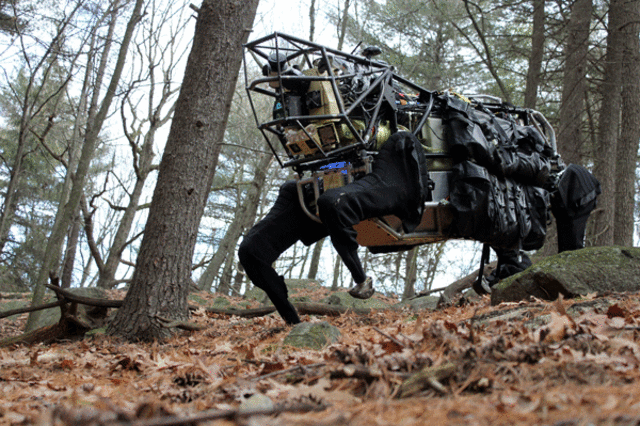
Google Buys Spectacular Robot Maker, Boston Dynamics

Google has acquired robotics engineering company Boston Dynamics , best known for its line of quadrupeds with funny gaits and often mind-blowing capabilities. Products that the firm has demonstrated in recent years include BigDog, a motorized robot that can handle ice and snow, the 29 mile-per-hour Cheetah , and an eerily convincing humanoid known as PETMAN. News of the deal was reported on Friday by The New York Times , which says that the Massachusetts-based company's role in future Google projects is currently unclear.
Specific details about the price and terms of the deal are currently unknown, though Google told the NYT that existing contracts — including a $10.8 million contract inked earlier this year with the US Defense Agency Research Projects Agency (DARPA) — would be honored. Google also says it doesn't plan to become a military contractor as a result of the acquisition.
Boston Dynamics began as a spinoff from the Massachusetts Institute of Technology in 1992, and quickly started working on projects for the military. Besides BigDog, that includes Cheetah, an animal-like robot developed to run at high speeds, which was followed up by a more versatile model called WildCat. It's also worked on Atlas, a humanoid robot designed to work outdoors.
In a tweet, Google's Andy Rubin — who formerly ran Google's Android division — said the "future is looking awesome."

Ford shows off its new Autonomous Research Vehicle equipped with Lidar Technology

At a media event in Detroit, Ford Motor Company gave the automotive world a glimpse of its newest research vehicle, a tricked out Fusion Hybrid designed to test out new autonomous driving technologies. The car looks like your typical 2014 Fusion until you glance at the roof. It’s equipped with four whirling cylinders, emitting constant beams of imperceptible laser light in all directions.
The system is called Lidar (a portmanteau of “light” and “radar”) and we’ve become accustomed to seeing much larger versions of these rigs on Google mapping vehicles tooling around our cities. Ford is using the Lidar system in combination with 360-degree cameras to help its Fusion “see,” creating a visual and topographical representation of the world around it.
That real-time construct is then compared against detailed virtual 3D maps, allowing the car to distinguish the permanent (lane dividers, exit ramps, park benches) from the temporal (frightened deer, pedestrians, oncoming traffic). The car then mashes all of that data together, and algorithms developed by the University of Michigan determine how the car reacts to its perceived surroundings.
The technology is very similar to what Google uses in it driverless car project, and Google is arguable much further ahead and unquestionably much more aggressive in developing autonomous car technologies. Ford maintains truly autonomous cars could be built today, but the public mindset simple isn’t ready for them. Google X’s engineers are already being chauffeured in self-driving cars to and from work .
At the media event, Ford group VP of product development Raj Nair stressed the research vehicle is not a driverless car. Instead, it will be used to test out new “advanced driver assistance systems” Ford is testing, such as its automated self-parking and obstacle avoidance technologies.

Thursday, 12 December 2013

Scientists Discover a Jewell at the heart of Quantum Physics


Physicists reported this week the discovery of a jewel-like geometric object that dramatically simplifies calculations of particle interactions and challenges the notion that space and time are fundamental components of reality.
“This is completely new and very much simpler than anything that has been done before,” said Andrew Hodges , a mathematical physicist at Oxford University who has been following the work.
The revelation that particle interactions, the most basic events in nature, may be consequences of geometry significantly advances a decades-long effort to reformulate quantum field theory, the body of laws describing elementary particles and their interactions. Interactions that were previously calculated with mathematical formulas thousands of terms long can now be described by computing the volume of the corresponding jewel-like “amplituhedron,” which yields an equivalent one-term expression.
“The degree of efficiency is mind-boggling,” said Jacob Bourjaily , a theoretical physicist at Harvard University and an author of the first of two papers detailing the new idea. “You can easily do, on paper, computations that were infeasible even with a computer before.”
The new geometric version of quantum field theory could also facilitate the search for a theory of quantum gravity that would seamlessly connect the large- and small-scale pictures of the universe. Attempts thus far to incorporate gravity into the laws of physics at the quantum scale have run up against nonsensical infinities and deep paradoxes. The amplituhedron, or a similar geometric object, could help by removing two deeply rooted principles of physics: locality and unitarity.