SmartRings

A high-tech ring that promises to replicate many of the features found in the latest crop of smartwatches, but without strapping a brick to your wrist, is now one step closer to reality.

Here’s how to set yourself up for success in 2014

As the old saying goes: your goals don’t work unless you do. You will likely face bumps in the road and moments when you feel as though you’re not making progress. When this happens, remind yourself of all that you have done, refocus, and keep going.

Science

“This is completely new and very much simpler than anything that has been done before,” said Andrew Hodges , a mathematical physicist at Oxford University who has been following the work.

Flat. Like a streak across space. Thin. Stretched out. How come whenever we see galaxies, they always look like this

NASA has the answer. And it has something to do with how a ball of dough becomes pizza.

The Masks We Wear

The smiles and laughter we display are clever devices hiding our pains and sorrows we carry within us. While tears and heart break are displayed for all to see revealing the thin cracks of the mask that we wear, allowing a small portion of how we truly ache inside be seen from observers quietly watching for you to reveal yourself. - Se more..

Showing posts with label smartphone. Show all posts

Thursday, 30 January 2014

Oppo N1 Lands in India: Full Phone Specification


Finally the Oppo N1 arrives to Indian markets with a price tag of Rs 39,999. With such a huge pricing, the Oppo N1 is now in the list of the expensive smartphone giants like Apple iPhone 5C, Sony Xperia Z1, Samsung Galaxy S4, LG G2, and HTC One.

Here is a quick view of the interior and the exterior of the giant smartphone.


GENERAL2G NetworkGSM 850 / 900 / 1800 / 1900
3G NetworkHSDPA 850 / 900 / 1700 / 1900 / 2100
SIMMicro-SIM
Announced2013, September
StatusAvailable. Released 2013, October
BODYDimensions170.7 x 82.6 x 9 mm (6.72 x 3.25 x 0.35 in)
Weight213 g (7.51 oz)
DISPLAYTypeIPS LCD capacitive touchscreen, 16M colors
Size1080 x 1920 pixels, 5.9 inches (~373 ppi pixel density)
MultitouchYes
- Touch-sensitive area at the back (O-Touch, supports long press, sliding and double tap)

DATAGPRSYes
EDGEYes
SpeedHSDPA; HSUPA
WLANWi-Fi 802.11 b/g/n, Wi-Fi Direct, DLNA, Wi-Fi hotspot
BluetoothYes, v4.0
NFCYes
USBYes, microUSB v2.0, USB OTG
MEMORYCard slotNo
Internal16/32 GB, 2 GB RAM
CAMERAPrimary13 MP, 4128x3096 pixels, autofocus, dual-LED flash,check quality
FeaturesRotating lens, geo-tagging, touch focus, face detection, panorama, HDR, long exposure (up to 8s)
VideoYes, 1080p@30fps, check quality
SecondaryYes, 13 MP, 4128x3096 pixels, autofocus, dual-LED flash
FEATURESOSColor OS based on Android OS, v4.2 (Jelly Bean)
ChipsetQualcomm Snapdragon 600
CPUQuad-core 1.7 GHz Krait 300
GPUAdreno 320
SensorsAccelerometer, gyro, proximity, compass
MessagingSMS (threaded view), MMS, Email, Push Email
BrowserHTML5
RadioNo
GPSYes, with A-GPS support
JavaYes, via Java MIDP emulator


Monday, 27 January 2014

iPhone 6 To Feature Sapphire Glass Screen and Solar Charger: Rumours

Apple is expected to unveil its next iPhone model later this year and the rumors about what the device will feature are flying. A few days ago, we mentioned that a test run of 100 units of the iPhone 6 with the sapphire glass screen had reportedly been made by Foxconn. In February of 2013, a patent surfaced that suggested an iPhone with a solar charger was on the way.

Today a new rumor has surfaced that combines the sapphire glass screen and that solar charging patent into something new. According to this rumor, the sapphire glass screen of the iPhone 6 will feature solar charging capability. It's unclear if the rumor is suggesting the screen will have an integrated solar panel or if they will be separate items.

Integrating a solar panel along with that sapphire screen in a smartphone would be something completely new in the market. The source of the rumor tips that the goal is to help keep the smartphone topped up and running as long as possible. Battery life is becoming a challenge as people use their devices more and power demands rise with more processing power and larger screens.

One of Apple's patents for the touchscreen solar panel tech hinted that the touch screen had a power management system that was able to take power from solar panels. This is pure rumor at this time, so take it with a grain of salt. We do know that Apple patented this sort of tech, so a solar charging iPhone 6 is certainly possible.

Source: NDTV

Blu Vivo 4.8 HD Android Smartphone: Specification & Reviews

Blu Products has announced its latest flagship smartphone running on the Android operating system. The new android powered gadget is called the Blu Vivo 4.8 HD and it comes with an impressively thin body. Whole hardware is packed 6.9mm thick body making the smartphone very slim.

The Vivo 4.8 HD has a screen that is 4.8- inches and is powered by AMOLED tech. The smartphone interior includes quad core MediaTek MT6589T processor operating at 1.5GHz and a PowerVR SGX544 GPU. The phone offers Android 4.2 and the quad core processor is coupled with 1GB of RAM which makes it very sharp and smooth.

The Vivo 4.8 HD comes packed with 16GB of internal storage and it supports the 4G 42Mbps HSPA+ connectivity. The smartphone has an 8MP rear autofocus camera that uses second-generation backside illuminated sensor that is able to record full HD resolution video. And a 5MP front facing camera for video calling.

Overall The phone looks very attractive and comes in four colors including green, black, white, and pink.

Other hardware features include:
> integrated GPS,
> Bluetooth 4.0,
> hotspot capability,
> FM tuner, and WiFi.

The Vivo 4.8 HD operates on 2G (GSM/GPRS/ EDGE) 850/900/1800/1900 MHz, 3G (HSPA+ 42Mbps) 850/1900, or 850/2100.

The smartphone is available in the US for $249.

Tuesday, 21 January 2014

LG G Flex Is Coming To European Markets

In a quest to dominate the smartphone market, LG will soon be introducing the curved LG G Flex to a few European markets in the coming month. It will be interesting to see how curvy it may prove to the dominanting curved smartphone makers.

As a high-end smartphone, the LG G Flex actually has much to offer except its 6- inch display that has a 1280x720 pixel resolution which may break hearts of many High Definition lovers. The rest of the hardware is really worth trying. LG Flex is powered by a 2.3 GHz quad-core Snapdragon 800 running on 2 GB of RAM, with 32 GB of data storage, 13 megapixel rear camera, and a 3500 mAh Curved battery.

Beyond the top-notch specs and curved shape, the G Flex also offers of a self- healing back cover that can magically make scratches disappear.

Currently The G Flex is actually available in only a few markets, namely Korea, Hong Kong and Singapore. And it will be making its way to US soon. Smartphone lovers can pre-order this curved gadget via T-Mobile and AT&T's Contract Policy.

Wednesday, 15 January 2014

Much Awaited Moto G Arriving To India

Finally Motorola, a Google Company has agreed to launch their latest flagship smartphone Moto G in India by the end of the January.

The Kitkat Powered Android smartphone has already been launched in Other Countries and This G taged Android gadget is believed to be the one of a kind under $200.

Lets have a Look at its sharp specs which makes it so irresistible.

Display:

* IPS LCD capacitive touchscreen, 16M colors
* 720 x 1280 pixels, 4.5 inches (~326 ppi pixel density)
* Protection: Corning Gorilla Glass 3

Memory:

* Internal 8/16 GB
* 1 GB RAM

Connectivity:

* Bluetooth v4.0 with A2DP, LE
* WiFi b/g , WiFi Hotspot

Camera:

* Primary 5 MP, 2592х1944 pixels, autofocus, LED flash.
* Secondary: Yes, 1.3 MP

OS:

* Android OS, v4.3 (Jelly Bean), upgradable to v4.4.2 (KitKat)

Processors:

* Chipset: Qualcomm Snapdragon 400
* CPU Quad-core 1.2 GHz Cortex-A7
* GPU Adreno 305

Power:

* Battery: Non-removable Li-Ion 2070 mAh battery
* Stand-by :Talk time Up to 24 h

Kitkat Powered Moto G is really worth tasting as it is loaded with the premium features.

Friday, 3 January 2014

Meet HaloBand: A cool gadget to control your smartphone with just a Tap on your Wrist.

The rise of mobile has given me so much: 24/7 connections with friends around the world, information exactly when I need it, the ability to track my fitness and health goals. Unfortunately, it’s also given me a complex about my giant sausage fingers and their constant inability to navigate the tiny keys on my smartphone’s slippery touchscreen. Sometimes I think I should have just bought a BlackBerry.

When I read about Haloband on their Kickstarter page , I felt like the Shanghai- based startup was speaking directly to me: “Everyone has trouble in locking and unlocking smartphones. The frequency usually hurts phones’ screen and keys, as well as our hearts. So we decided it’s time to do something.”

Haloband is a silicone wristband that is embedded with NFC chip and lets you operate your choice of functions by tapping your Android smartphone on your wrist. It’s also linked to a cloud account, which lets you save your ID as well as information you can send to other mobile devices. After setting up your wristband with the Haloband app, you can use it to unlock your phone, take photos or send emergency alerts, among other options. To get an idea of what Haloband can do, watch their hilarious Kickstarter video embedded above (“I’m from the future. If you scan my wrist, you can get my business card information. This is my information, from my wrist, on your phone. Because I’m from the future.”)

The project has already raised almost double its $10,000 goal on Kickstarter and its early bird specials are closed, but you can still select from several options, starting from just $25 for a black or white Haloband. Funding closes on Jan. 16 and the bands are scheduled to ship in February.

Haloband was developed by a Shanghai- based team that includes a former Intel engineer and focuses on NFC technology. They plan to release an open API so other developers can create their own Haloband apps and help smartphone users wrist easy (rimshot).

Tuesday, 31 December 2013

goDock: Mobile Docking Gadget

Phones are mobile, your dock should be too! The goDock is a mobile docking station and the only iPhone accessory that allows you to keep it all together while you’re on the move. It serves as a stand so that we are not forced to lean our phones against objects that are not meant to support our devices. It was designed to fit ANY iPhone whether it has a case or not without having to make adjustments. You can use the goDock to charge your device on outlets and power strips, or directly connect to your computer through USB.

Do your cables and headphones often look like little elves sneak into your home and tangle them up every time you turn your back? THEY WON’T ANYMORE. goDock neatly organizes it all. Its unique shape with rounded off corners, smooth finish, and compact nature makes it easy to insert into any pocket or backpack without resistance. This ergonomic shape is incredibly convenient when you are on-the-go. The goDock is the world’s first docking station designed to truly be mobile. Throw it in your book-bag, briefcase, pocket, and GO!

Monday, 30 December 2013

Samsung's New Chips Could Put 4GB of RAM Into Every Phone

There's an inherent trade-off when designing a phone, between pure power and respectable battery life. Fortunately, Samsung's latest memory chips are so efficient that they could make 4GB of RAM in phones an industry standard—and make 4K phones a very real thing indeed.

The company's first 1GB low-power DDR4 memory chip uses a higher bandwidth than its predecessors, running at 3.1Gbps to provide a 50 percent speed boost over existing DDR3-based chips. Not only that, but the new chips use 40 percent less power, too. Squeezing 1GB onto a single die, four of the chips layered together should provide the highest capacity mobile phone RAM currently available.

Samsung only says that the new memory will go into mass production some time in 2014, but it's intended for use in ultrabooks, tablets and high-end smartphones. Indeed, Samsung goes as far as explaining that "with the new chip, [we] will focus on the premium mobile market including large screen UHD smartphones... that offer four times the resolution of full-HD imaging." Yep, that's 4K smartphones.

The bottom line, then: your next phone (or at least the one after it) will likely rock 4GB of RAM and offer rather pointless resolution. Woo!

Source: Samsung

Sunday, 29 December 2013

Nexus devices still suffering from several Bluetooth bugs

Nexus devices are great. They get software updates directly from Google very soon after the new versions of Android are made available. The downside of that is that newer versions of Android aren’t always bug-free. We’ve seen Google push out minor updates to Android 4.4 right after release to fix a small number of bugs, but it looks like there are still a handful of issues surrounding Android’s Bluetooth stack that was introduced in 4.2 to replace the older, less-functional stack in prior versions of Android.
The new Bluetooth stack brought some new really cool features to Android, such as Bluetooth LE that helps power many smartwatches and wearable tech, and KitKat built on that feature set to add in a few more enhancements. Unfortunately, some really basic things have been broken in the process for many Nexus users, including Bluetooth pairing, volume control, and general inconsistency with Bluetooth devices. Audio quality can be affected, connections can randomly drop, and even the entire Bluetooth service can crash because of these issues. Overall, definitely not something you want plaguing Google’s flagship devices.
These issues affect pretty much all Bluetooth devices, but as for affected Android devices, it’s pretty much been narrowed down to three primary culprits; the Nexus 4, Nexus 5, and 2013 Nexus 7. They’re all Nexus devices, but a common point between all three is that they’re Nexus devices that specifically use Qualcomm processors. It could just be a coincidence, but it could also have something to do with Qualcomm’s supplied Bluetooth drivers. This is one of the rare cases where it’s nice to have a skinned manufacturer phone, since many of them use custom Bluetooth stacks for their devices to guarantee stability with devices.
Android Police has done an excellent job of writing up a full list of problems and possible solutions, so if you’re affected by any Bluetooth bugs on a Nexus device, you may want to check out the link below to try to get some issues fixed.
source: Android Police

Friday, 27 December 2013

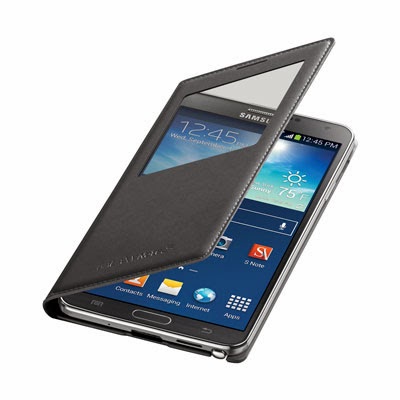
Samsung offers wireless charging, S-View flip cover for Galaxy Note 3

Samsung has combined two popular cover options into one with the release this week of the Wireless Charging S-View Flip Cover for the Galaxy Note 3. The S-View feature gives users access to their phone’s features without having to actually flip open the cover. Users can access information like the clock and phone status, accept or reject incoming calls, quickly access the camera, open the Action Memo menu and even navigate music.

Mated to the S-View cover is a wireless charging compatible back cover. The new cover will work with Qi-compatible charging pads so users can eliminate plugging and unplugging their device every time it needs a charge. The back snaps into place replacing the normal back cover to help keep the device slim and trim.

The new covers are available in black or white and will set buyers back $69.99.

Nokia Lumia 1320 Lands in China First

Large-phone lovers on a budget, rejoice: Nokia's 6-inch, $339 Lumia 1320 smartphone is now available in China. That's a bit earlier than the January 2014 time-frame it first promised, and the Finnish company said it'll also roll out in Taiwan, Hong Kong, Singapore and other countries (likely in Europe) in the coming weeks.

Lumia 1320 packs a whopping 3,400mAh battery for the long-winded, but otherwise has middling specs: a 720p screen, dual- core 1.7GHz Snapdragon 400 CPU, 1GB of RAM, 8GB of expandable storage and a 5- megapixel camera.

Unfortunately, there's no word of an arrival date for those in the US torn between a tablet and phone -- but given the LTE bands we saw at the FCC, don't hold your breath.

Thursday, 26 December 2013

TCL's $330 Idol X+ boasts 2GHz octa-core chip, Bluetooth Activity Tracker

While some of us are still recovering from holiday, the TCL folks in China -- whose products are better known under the Alcatel brand in many other countries -- have gone ahead and launched a new phone. As the name suggests, the Idol X+ is pretty much an updated version of the already impressive Idol X , with the highlight being it's the first device to carry the 2GHz bin of the octa-core MT6592 SoC (with 2GB RAM). TCL's reps told us that this is courtesy of an exclusive deal they arranged with MediaTek. Additionally, you'll find a familiar 5-inch 1080p IPS display within a slimmer 1.9mm bezel, plus a 13-megapixel f/2.0 camera on the back. Due to the larger 2,500mAh battery, the body is now slightly thicker at 7.9mm, but it's actually not that much different when we saw a prototype earlier.
For a flagship Android phone that costs just CN¥1,999 or about US$330 unsubsidized, it's pretty bold of TCL to also include a Bluetooth activity plus sleep tracker. This Boom Band is essentially a little nugget that sits inside a plastic wristband (available in several colors), and it can double as a proximity alarm in case you accidentally leave your phone behind. It naturally has a companion app that lets you track your performance, and should you wish to, you can also show off your stats to friends.
There's no word on whether non-China markets will get the same package branded by Alcatel, but if you already reside in China, you can head to JD.com and order one on January 15th.

Wednesday, 25 December 2013

Gionee Elife E7 Mini launched With Oppo like Swivel Camera

Chinese phone maker Gionee has just released the Elife E7 mini version of its mega-spec'd 5.5-inch, 1080p Elife E7 phone , but it resembles its larger sibling in name only.

First off, the 13-megapizel camera and flash are on a swivel at the top, Oppo N1-style.

The specifications are otherwise a step down, starting with the 4.7-inch, 720p screen and continuing with the 1.7GHz octa-core MediaTek MT6592 CPU (instead of a 2.5GHz Snapdragon 800) and 1GB of RAM in lieu of 3GB.

It also sports 16GB of storage, dual-SIM 3G capability and Android 4.2. Still, the folks at FoneArena, who got their hands on one during its launch in India, said it feels just as premium as the Elife E7 and it looks to have skipped the fingerprint-prone glossy finish of that model. Though it likely won't arrive in the US, selfie self-portrait lovers in India will be able to grab it for 18,999 (about $310).

[Image credit: FoneArena]

Thursday, 12 December 2013

LG G Pad 8.3 News & Reviews

If you've been eyeing the LG G Pad 8.3 , your decision just became more difficult. Yesterday Google announced -- and began shipping -- a Google Play edition of the tablet for $350 in the US, which makes it the very first slate to receive the stock Android treatment. What does this mean, exactly? Google Play editions come with Android 4.4 KitKat without any manufacturer or carrier customizations, so it looks precisely the way Google intends it. This can be good or bad, because there are a couple tradeoffs you need to consider: The good news is that these types of devices typically get upgrades to the newest version of Android far earlier than the vast majority of smartphones and tablets, but you also need to give up a few features that were unique to their skinned counterparts.
In the case of the G Pad 8.3, this means you won't be able to enjoy the Knock On (aka, "double-knock") feature, nor will you have Slide Aside or access to a litany of LG's Q-branded functions like QPair, QRemote or QSlide. None of these missing services are crucial to the functionality of the G Pad, although we must admit that we've grown rather fond of Knock On. The camera interface is also quite different, but the only thing that might frustrate you is the lack of manual settings; if you only rely on automatic mode to make the photo magic for you, this likely won't be an issue of concern. Just like we saw on the Z Ultra Google Play edition, the G Pad also doesn't come with the native Android gallery app, as it appears that the Google+ Photos app has taken its place as the default. You'll also have the stock camera UI to deal with, rather than LG's, so you won't be able to make many manual adjustments. Of course, this probably isn't a huge concern for a lot of tablet users who may only use their camera for basic needs.
Aside from software changes, you're not going to see anything different on the outside. The dimensions are all the same as the original model, as are the actual hardware components. It's only available in black (the back strip is fitted with brushed metal, with black plastic ends), but it's offered for the same price as the model we reviewed last month.
Source: Engadget

Wednesday, 11 December 2013

The Asus Fonepad 7 finds its spot in the Indian market


The concept of the phablet has very strong roots in the Indian obsession for 'value for money'. People wanted a device that was as large as a tablet, but could also make calls. No need to buy or carry two devices for the same. But as the phablet became a rage in India and many other geographies, some of these people realised that they were actually using these devices more as tablets and less as phones. That meant it was no longer necessary to keep the size of a voice calling device at something you could hold in one hand. As is customary, Samsung latched on to the idea before most others and made a killing with tablets that could make calls. Extremely awkward when you hold a device as large as a paperback to your ear, but very comforting when you realise that you have bought it for lesser than what you would get a mid-range smartphone for.


There is not much novelty in a tablet that can place calls. But there are newer players in the market. We recently laid our hands on the Asus Fonepad 7, among the first Android tablets to be powered by an Intel processor in India. This is important as Intel is slowly, but surely opening up to the opportunity that is the world's most popular mobile operating system.

Price: Rs 17,499.

Source: indianexpress.com